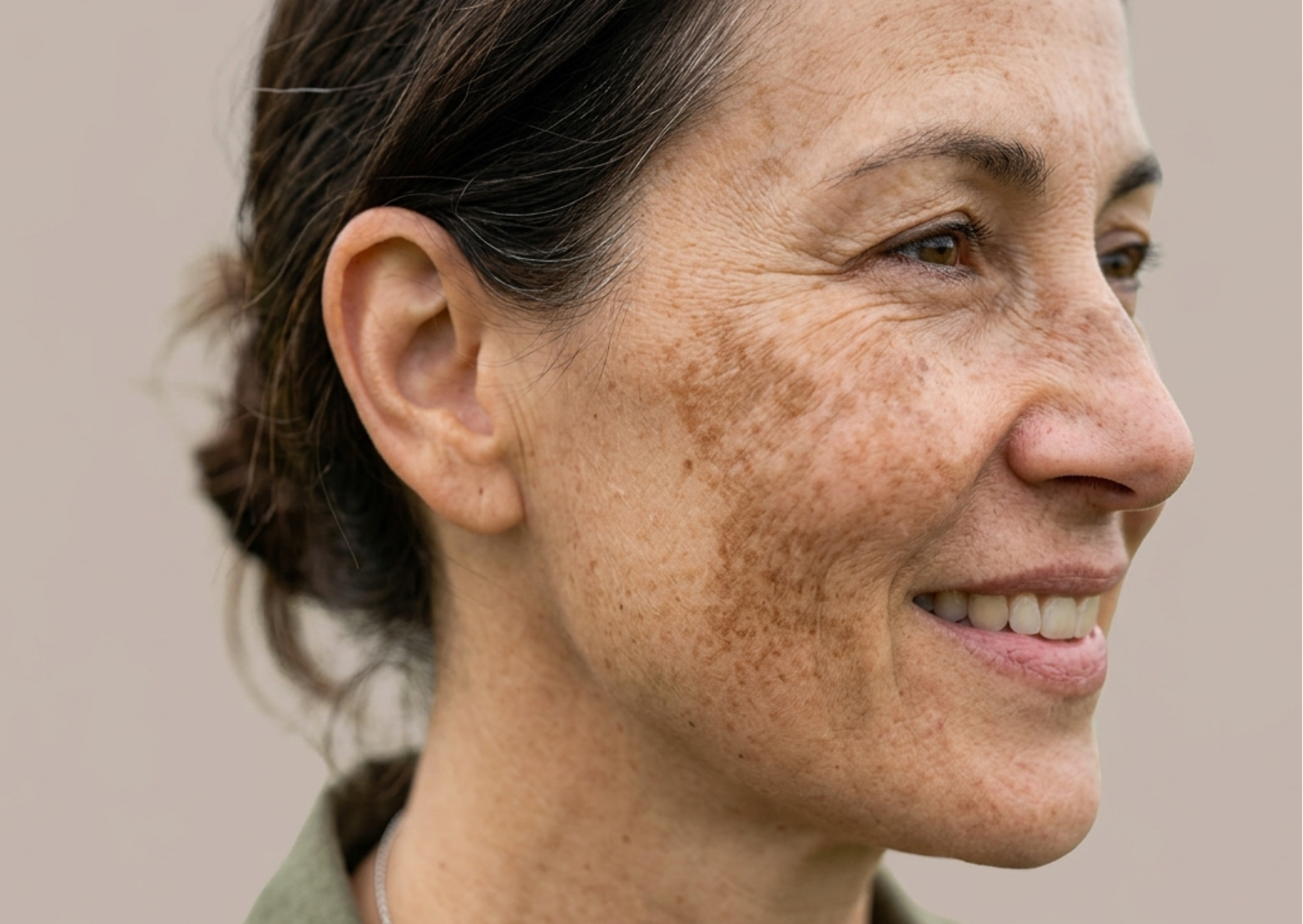
Melasma is one of the most common — and most frustrating — pigmentation concerns I see in clinic. It appears as symmetrical, brownish patches, usually across the cheeks, forehead, nose, and upper lip, and it can be persistent, often fading and returning depending on hormones, sun exposure, and season.
What causes it
Melasma develops when melanocytes, the cells responsible for pigment production, become overactive in response to certain triggers. The most common drivers include:
- UV exposure. Sunlight is the single biggest aggravator, which is why melasma often worsens in summer months.
- Hormonal shifts. Pregnancy, birth control, and hormone therapy are strongly linked to melasma, sometimes referred to as the "mask of pregnancy."
- Genetics. A family history of melasma increases likelihood, and it's more common in those with medium-to-deeper skin tones.
- Heat. Beyond UV light, heat exposure itself appears to play a role in triggering flare-ups.
Why it's difficult to treat
Unlike other forms of pigmentation, melasma sits deeper in the skin and is more reactive to inflammation — which means aggressive treatments can sometimes make it worse rather than better. This is why melasma calls for a careful, layered approach rather than a single quick fix.
Melasma isn't cured in a single visit — it's managed, patiently and consistently, over months.
How we approach treatment
- Daily broad-spectrum SPF — non-negotiable, and often the single most important step in preventing flare-ups.
- Topical brightening agents such as tranexamic acid, azelaic acid, or prescribed combination creams to gradually fade pigment.
- Gentle in-clinic treatments, carefully selected, as overly aggressive lasers or peels can trigger rebound pigmentation in melasma-prone skin.
- Oral tranexamic acid, in select cases, under medical supervision for more resistant melasma.
What to avoid
Harsh scrubs, high-strength acids without guidance, and unprotected sun exposure can all aggravate melasma. Heat from saunas or hot yoga can also trigger flare-ups in sensitive individuals, so it's worth paying attention to your own personal triggers.
Setting realistic expectations
Melasma responds well to consistent care, but it is a condition that's managed rather than permanently eliminated — particularly for those with an ongoing hormonal or genetic predisposition. With the right routine and a little patience, most patients see significant improvement in the evenness and clarity of their skin over a few months of treatment.