Advanced Laser & Energy Technologies
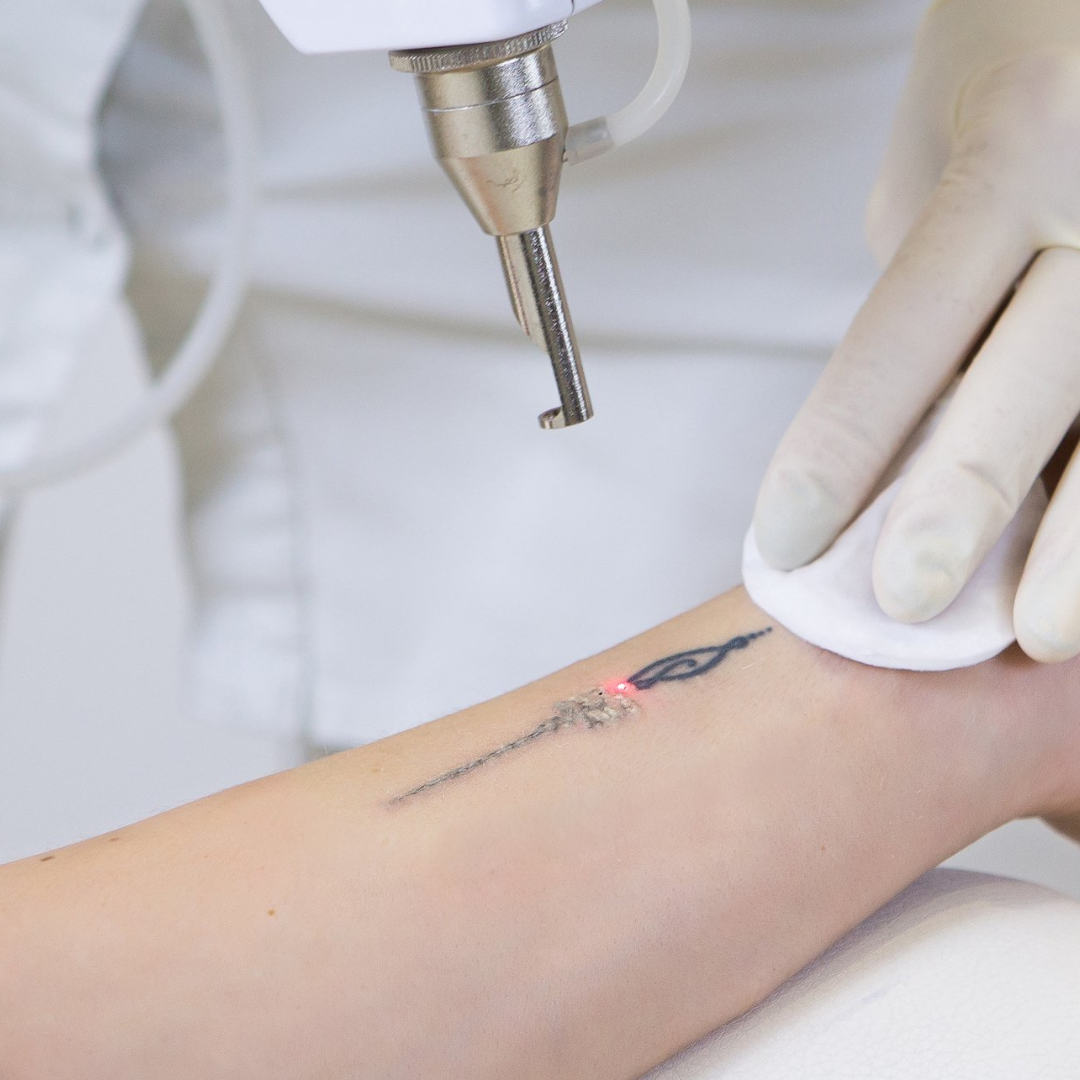
Advanced laser technology that progressively and precisely fades unwanted ink, with protocols tailored to your specific ink type, color, and skin tone for safe, effective removal. Most tattoos need 6–10 or more sessions, with 3–7 days of downtime, and the ink fades a little more after each one. Dr. Anna Lisniak, specialist dermatologist, treats patients at Fayy Health, One Central, Dubai.
Book a Consultation
Sessions Needed
6–10+ sessions
Downtime
3–7 days
Results Visible
Gradual, per session
Results Last
Permanent
What It Treats
Laser tattoo removal works by breaking down ink particles into smaller fragments that the body's immune system can naturally clear away over time. The number of sessions needed depends on ink density, color, and tattoo age.
Before Your Treatment
A little preparation goes a long way toward a comfortable session and optimal results. Dr. Anna will go over a personalised pre-care plan during your consultation — but here's what to generally expect.
After Your Treatment
The treated area is usually red, swollen and sometimes blistered for a few days, then it scabs and heals over 1–2 weeks. Ink fades gradually between sessions. Here's a general idea of what to expect.
The treated area may swell, redden, or feel like a sunburn. This is a normal inflammatory response.
Some blistering or scabbing may occur — this is part of the body's natural healing and ink-clearing process.
Scabs and blistering resolve as the skin heals. Avoid picking to reduce the risk of scarring.
The body continues clearing ink particles over several weeks, with visible fading before your next session.
Aftercare
Following the aftercare plan closely is one of the biggest factors in how well your skin heals and how long your results last. Dr. Anna provides a full written aftercare guide after every session.
Risks & Suitability
Each session causes a small, controlled skin injury. Most reactions settle within two weeks; some outcomes depend on the tattoo itself.
Related: laser treatment on darker skin · scar treatment
In the first hours to days.
Heal over 1–2 weeks; do not pick them.
Temporary pigment change, more likely on darker skin; usually fades over months.
Some colours (green, blue, yellow) and some inks fade only partly.
White, flesh-tone or cosmetic tattoo inks can turn darker; a test spot may be done.
Pregnancy; a recent tan; a history of keloid scars; medicines that make skin sensitive to light; an infection in the area.
Good to Know
This varies significantly based on ink color, density, depth, and your skin's response — most tattoos require 6–10 or more sessions spaced 6–8 weeks apart.
Many tattoos can be significantly faded or fully removed, though some ink (particularly certain colors like green or yellow) can be more resistant and may leave faint traces.
Most patients describe the sensation as similar to or slightly more intense than getting the tattoo itself. Numbing options can be discussed with Dr. Anna for added comfort.
Black and dark blue inks respond most readily to laser treatment. Lighter colors like yellow, white, and certain greens can be more challenging and may require specialized approaches.
When aftercare instructions are followed closely, the risk of scarring is low. Dr. Anna will assess your skin and tattoo to minimize this risk throughout the process.
The price depends on the size, colours and age of the tattoo and how many sessions it needs, so it is set after Dr. Anna has assessed your skin and agreed a plan with you. You receive a personal quote at the consultation, before any treatment starts. Message the clinic on WhatsApp (+971 50 408 9909) to book a consultation.
Book a consultation with Dr. Anna to assess your tattoo and removal timeline.
This information is provided for general educational purposes and does not constitute medical advice. Individual results and suitability vary — a personalised assessment with Dr. Anna is required before any treatment.
Dr. Anna Lisniak, Specialist Dermatologist (DHA licence 77231337-006). Last updated 8 November 2026.